
April 6, 2026
Smoking Cessation! What Can I Do?
By Fatima Naqvi, MD, CMD, HMDCB, WCC, FAAFP
“Doctor, I have been smoking for the last 40 years. It has become my habit; a habit I really want to quit!”
To discipline oneself in life is never easy; it is an ever-learning process for those who believe that constant change is a part of life and growth. Habits are nothing but repeated actions that are performed repeatedly. It is hard to let go of habits that yield easy gratification. However, breaking those habits requires discipline and dedication.
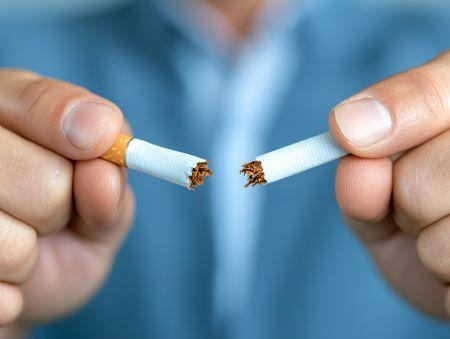
Endless research has been done to evaluate the factors that initiate and lead to smoking addiction. The teenage years are usually the starting point for most smokers. It begins as a cool thing when company and peer pressure persuade them to perform certain acts. Rationalization and introspection are not the norm in most situations at that stage of life. Before you know it, smoking becomes a habit and not just a fun act. By the time one realizes the consequences and adverse effects of smoking, it has already been a few decades.
Health-care providers, especially physicians, can play a key role in helping their patients. It is crucial to be empathetic and non-judgmental toward them when discussing such matters with their patients. The Substance Abuse and Mental Health Services Administration (SAMHSA) and the Centers for Disease Control and Prevention (CDC) offer programs, pamphlets, and resources for providers to support smoking cessation.1,2
One of my residents at the nursing facility expressed her willingness to break her chronic smoking habit. It dawned on her that it was time to quit since she was now beginning to have trouble breathing. What seemed to work in this situation was a brief counseling session at the end of each visit. Assessing willingness to quit before any advice is more beneficial and time-saving. Prochaska and DiClemente outline the cycle of change that describes stages of readiness to change behavior, such as smoking cessation.3 During all these stages, providing support and encouragement is critical. Non-judgmental discussion and physician support have been shown to reliably predict positive outcomes. My patient decided to quit cold turkey. While there are nicotine replacement products and non-nicotine medications, e.g., varenicline and bupropion, her will to quit was so powerful that she declined nicotine patches or gradual smoking cessation. She decided to select a day of celebration for herself and never go back to smoking again. She discarded all the cigarettes; she decided to leave the company of her friends who smoke and to continue her communication with me in this regard. And after that day, she never went back to smoking.
She accomplished her goal after 40 years! This is the story of resilience and never giving up! She feared that she would not be able to do it and wondered what would happen if she developed cravings and went back to it. She told me that she had so many questions and fears, and never gathered enough courage to quit smoking. After a few moments of pause, she stated that my gentle reminders at every visit made her reconsider the smoking habit. Reinforcement contributes to successful behavioral change. This emotional support gave her inner strength and allowed her with reflective moments to reflect on her smoking habit. She felt that her daily life revolved around smoking cigarettes and was leaving her with an inferior quality of life and worsening health! This realization worked as a miracle for her, and she made a firm decision to quit smoking. This is a success story that I share with my resident, indeed a significant achievement for both of us!
Sometimes stepping stones or small steps toward improvement can bring true success. The empathy, trust, and therapeutic bond between the physician and patient often facilitate a cure that a million dollars cannot bring. We can change the world, but we must believe in that change within us first. Small steps, taking one day at a time, one thing at a time, paying full attention to what we are doing, will eventually lead to the desired goal. After all, Aristotle said, “We are what we repeatedly do. Excellence, then, is not an act, but a habit.”
References
1. Substance Abuse and Mental Health Services Administration. Quitting Tobacco: Help Your Clients to a Healthier Life. Health and Human Services. HHS Publication No. SMA18-5069QT Available at: https://library.samhsa.gov/sites/default/files/sma18-5069qt.pdf
2 Centers for Disease Control and Prevention. Smoking and Tobacco Use. Health and Human Services, May 15, 2024. https://www.cdc.gov/tobacco/hcp/patient-care/clinical-cessation-tools.html
3. Prochaska JQ, DiClemente CC. Stages and processes of self-change in smoking: Toward an integrative model of change. Journal of Consulting and Clinical Psychology, 1983; 5:390-395.
Fatima Naqvi is an assistant professor at George Washington Geriatrics and Palliative Care/Medical Faculty Associates, medical director at Ingleside at Rock Creek, president of the Mid-Atlantic Society for Post-Acute and Long-Term Care Medicine (MMDA), and editor-in-chief of the MMDA Newsletter.