

November 5, 2026
The Verdict Is In: Trauma Is Everywhere
By Sahebi A. Saiyed, MD, MPH, CMD
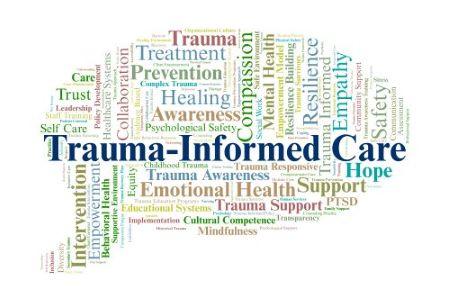
When I got a summons for jury duty, I anticipated that I might have to serve on a case. What I didn’t expect was to learn about the impact of trauma and the widespread need for trauma-informed care (TIC).
When the time came, the case I was called for involved domestic abuse, harassment, and sexual abuse. The jury pool was first seated together for “voir dire”—the initial questioning of prospective jurors. They queried us on issues such as: Have you ever called 911? Have you had an interaction with the police? Is there anything in your life that might affect how you hear a case like this? As hands went up in response to each question, I noted how many people are impacted by crime or violence and/or have had interactions with law enforcement.
Next, they divided us into groups of 15, and the attorneys for both sides went down the list, one person at a time, asking each of us for more information about our experiences and why we had raised our hands.
I sat through two of those groups, and it felt like watching a television drama unfold, except these were real people describing actual experiences. Only three of the 30 people had nothing to report.
The real-life experiences they reported were powerful and disturbing: a son watching his father beat his mother, someone who saw a friend’s mother shot in cold blood, and more. These were stories of violence within families, between neighbors, and among friends and acquaintances. These were witnessed by children and adults—often reported by no one, addressed by no one, and simply absorbed into the ordinary life of a household.
There were stories about the physical abuse of children, sexual abuse by relatives that continued for years, racism, and encounters with law enforcement that left people more frightened than reassured.
These were people from just one county, pulled at random from a list of area residents. They represented various races, ages, genders, occupations, education levels, and socioeconomic backgrounds. There was nothing obvious connecting them except a mailing address.
In reality, the statistics suggest that such experiences are more common than one may think. According to the Centers for Disease Control and Prevention (CDC), approximately two-thirds (about 64%) of U.S. adults report experiencing at least one Adverse Childhood Experience (ACE), which are potentially traumatic events occurring before the age of 18.1 But these weren’t just statistics. These were real people on an ordinary Tuesday.
This experience affected me as an empathetic human but also as a geriatrician, and I came away with some important insights. I realized that every patient or family member I see was once a person in a room like that. They may have traumas that few know about, or that they didn’t even realize or acknowledge were problematic. Perhaps they’ve never told a soul or allowed themselves to speak about what happened to them.
But that day in the courtroom made me think about trauma from another perspective: caregiving.
What happens when the older adult who now needs care was once abusive? How does a history of violence, neglect, or estrangement shape the relationship between an older parent and an adult child? Why might an adult child be unable—or unwilling—to provide the kind of care we assume families naturally give?
We provide TIC for our residents, but we need to realize that trauma isn’t limited to them. Their children, spouses, and caregivers may also experience trauma. These may be related to the resident—an adult daughter who is caring for an abusive mother or an abused spouse living with a violent husband—or apart from the family dynamic, such as a caregiver who was seriously injured in a car accident as a child. Whatever the source of the trauma, it can affect numerous relationships and interactions like a ripple in a pond.
We are not the judge and jury for our residents, their families, and/or caregivers. Instead, we need to be empathetic and understand that trauma is common and that one person’s trauma can affect many people. Toward this end, it is important to remember the universal precautions of TIC, which encompass five core areas: considering the impact of pervasive crises and past trauma, using therapeutic communication, practicing nonjudgmental care, creating a healing environment, and practicing self-care.2,3
As I learned in that courthouse, not everyone shares the same experiences or background, and not everyone has the same reaction to a traumatic situation.
We can’t change the past for our residents and others, but we can respect their feelings, acknowledge their past traumas, and contribute to a positive future.
Sahebi A. Saiyed is a CLC medical director and associate professor of medicine at Emory School of Medicine. She has practiced post-acute and long-term care since completing her geriatric fellowship in 2010. Her clinical and research interests focus on trauma-informed care in patients with dementia and trauma-informed care in nursing home patients.
References
1. Swedo EA, Aslam MV, Dahlberg LL, Niolon PH, Guinn AS, Simon TR, Mercy JA. Prevalence of Adverse Childhood Experiences Among U.S. Adults - Behavioral Risk Factor Surveillance System, 2011-2020. MMWR Morb Mortal Wkly Rep. 2023 Jun 30;72(26):707-715. doi: 10.15585/mmwr.mm7226a2. PMID: 37384554; PMCID: PMC10328489.
2. Center of Excellence for Behavioral Health in Nursing Facilities. Apply the 4Rs to Create a Trauma-Informed Approach in Nursing Facilities. Centers for Medicare & Medicaid Services; 2025.
3. Institute for Inpatient Psychiatric Rehabilitation. Trauma-Informed Universal Precautions. Rutgers University, School of Health Professions. Accessed October 6, 2026.