
May 4, 2026
Workshop Opened the Door to Long-Term Care Research
By Barbara J. Zarowitz, PharmD, MSW, BCPS, BCGP, FCCP, FCCM, FASCP, FPALTC
The Foundation for Post-Acute and Long-Term (PALTC) Care Medicine’s philanthropic mission focuses on advancing the workforce, research, and education in PALTC settings. One of the Foundation’s primary initiatives has been to stimulate, identify, and fund high-quality, peer-reviewed research.
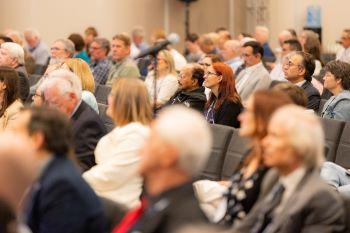
This year, the Foundation sponsored the first Research Workshop, “Open the Door to LTC Research,” at the PALTC26 Annual Conference. The goal of the workshop was to inspire attendees to contribute to research in PALTC settings by helping to acquire research knowledge and skills, promoting involvement in clinical research, expanding engagement in NEXT STEPs, and recruiting clinicians and facilities into research. NEXT STEPs (Nursing Home Explanatory Clinical Trials Supporting Transformation by Enhancing Partnerships) is an initiative funded by the National Institute on Aging to build a network of researchers, nursing homes, and other partners to advance evidence-based care through clinical research trials.
The four-hour workshop was kicked off by Sarah Holmes, PhD, MSW, associate professor at the University of Maryland School of Nursing, who provided an overview of the research process and framed differences between clinical research and quality assurance process improvement (QAPI) initiatives. “Whereas clinical research aims to generate broadly generalizable knowledge under institutional review board oversight, QAPI typically focuses on improving care processes at the local level within units or facilities,” said Dr. Holmes.
“QAPI, when performed with robust analyses that include a matched comparison group to account for confounders and potential biases, can provide results that are similar to what may be found in a research study such as a randomized controlled trial”, stated Joseph Ouslander, MD, professor of geriatric medicine at the Charles E. Schmidt College of Medicine at Florida Atlantic University. Dr. Ouslander continued the workshop with his presentation, “From Bedside Observations to Quality Improvement Research and Health Policy.” Through his work in urinary incontinence, fall risk reduction, sleep disorders, and reducing transitions in care, Dr. Ouslander demonstrated how “asking relevant clinical questions at the bedside can lead to meaningful, publishable findings that improve the quality of nursing home care.”
NEXT STEPs Co-investigators Debra Saliba, MD, MPH, director of the UCLA/JH Borun Center for Gerontological Research, Anna and Harry Borun Endowed Chair in Geriatrics at UCLA and research physician in the Los Angeles VA GRECC (Geriatric Research and Clinical Center), and Cari Levy, MD, PhD, CMD, FPALTC, professor of medicine and division head of geriatrics at the University of Colorado Anschutz Medical Campus, outlined the structure, purpose and opportunities within the three cores of NEXT STEPs: a) Recruitment and Retention, b) Methods, Measures, and Data, and c) Projects and Training. The NEXT STEPs website houses a wide array of handouts, brochures, checklists, slide decks, webinars, and videos that address the importance of research in nursing homes, regulatory requirements, key players and relationships, research design and methods, recruitment processes, and terminology.
NEXT STEPs offers 45-minute research studios with senior investigators to assist participants in formulating research objectives, methods, and answering pre-defined or emerging questions regarding their proposed studies. Three pilot projects have been funded, and three more were scheduled to be announced in April 2026. Information about the third funding cycle beginning in October 2026 can be found on the NEXT STEPs website.
Stephanie Kissam, executive director of the Long-Term Care Data Cooperative, described her organization, which currently houses data from over 3,800 skilled nursing facilities and 1,100 assisted living facilities across the United States. The data repository includes daily resident census, diagnoses, vital signs and demographic information, allergies, orders (medications, labs, advance directives, therapy, diet, radiology), medication administration records, laboratory results, immunization records, Minimum Data Set assessments (skilled nursing facilities only), and structured nursing notes, which can be obtained to answer research questions.
In addition to gaining access to processes and outcomes that are difficult to gather elsewhere, data in the LTC Data Cooperative can be linked to Centers for Medicare & Medicaid Services claims to expand the type and volume of possible exposures and outcomes for measurement.
Brian McGarry, PT, PhD, assistant professor in the Department of Medicine, Geriatrics/Aging and Public Health Services at the University of Rochester Medical Center, emphasized several key recommendations regarding clinical research. He noted that, “Clinicians should do research to enhance the deep understanding of the link between the real world and data. Research is a team sport strengthened by collaborative partnerships between nursing homes and academic centers. Investigators should always examine the raw data and visualize data graphically to detect patterns and understand variances.”
In the last 90 minutes of the research workshop, participants circulated among faculty members to ask their research questions. Participants were enthusiastic and delved into detailed discussions during that time.
As the workshop organizer, I closed the event with take-home messages: “The basis of much great clinical research is bedside observation. Valuable resources are available to support research activities. Clinical research in PALTC involves jumping hurdles, effective collaborative teams, and tenaciousness.”
The research workshop was recorded and will be posted on the Foundation for PALTC’s website for viewing.
Barbara J. Zarowitz is editor-in-chief of Caring for the Ages.